Driving agroecological change through transdisciplinary research (Webinar Overview)
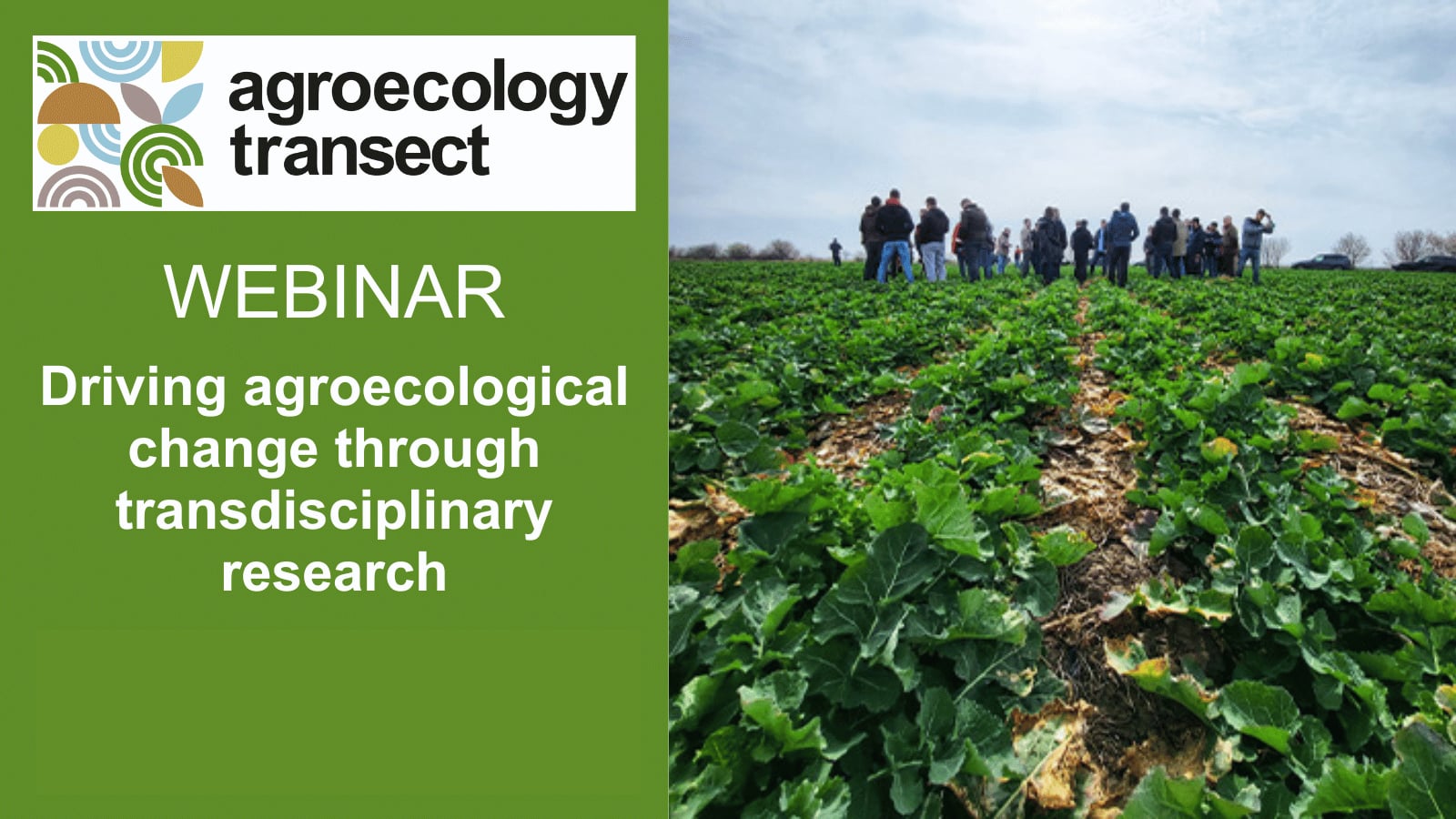
The webinar presents experience and good practices in building and managing transdisciplinary research and projects, as well as using the knowledge gained from them in achieving tangible change in our food and agricultural systems. Watch the full webinar here.
For many years, the EC has been investing in studies and projects useful for the development of the Common Agricultural Policy (CAP) through the application of the so-called “multilateral approach”, which also includes transdisciplinary research. More than 45% of calls for research and innovation receive funding under the multilateral approach. This is how the “EU-CAP” structure was created, which collects and works with this accumulated experience. Recently, the “multilateral approach” was replaced by a new term – the so-called “European Network of Living Laboratories” (ENoLL).
Focusing on transdisciplinary research to achieve agroecological transition, agroecologist Walter Rosing from Wageningen University shared some obstacles that hinder the smooth management of such projects. For example, transdisciplinarity is often an uncomfortable approach for the participating scientists, because they mainly aim to extract general knowledge. Agroecologists and agricultural experts, on the other hand, need local solutions. And public sector participants are looking for quick solutions to problems, which does not correspond to the long-term nature of this type of research.
This webinar addresses precisely these difficulties with managing transdisciplinarity in the context of the Agroecology-Transect project. The project successfully applied the Co-Innovation approach, a learning tool presented in detail during the webinar. It was applied both in the planning and implementation of the project. The tool analyzes the Agroecology-Transect project from three key perspectives:
-
As a complex adaptive system, divided into several levels – individual (farmer), farm, innovation environment, environment, etc. They all interact and this leads to the corresponding results.
-
As a social learning process – collaboratively learning about the perceptions of others. This leads to a better collective understanding of the needs of stakeholders.
-
Need for monitoring and evaluation during the project, but also after incomplete completion, to make realistic reporting and analysis.
Watch the full recording of the webinar "Driving agroecological change through transdisciplinary research" to gain experience and good practices from the experts working on the implementation of the Agroecology-Transect project.
Agroecology-Transect is a Horizon Europe project that explores how nature-based agriculture is developing in 11 countries in Europe and beyond, and how these practices can accelerate positive change for people, animals and the environment.
For four years, 11 regional innovation centers, in collaboration with university, research and business partners, have been generating solid data to help develop agroecology from the ground up.