STEP’s position on the official draft of the BG CAP Strategic Plan
As a civil society organization working in public benefit for sustainable rural development and conservation of High Nature Value farming, we believe that the national strategic documents, including the Strategic Plan for Agricultural and Rural Development (CAP SP) for the period 2023-2027, must be in line with the objectives of the European Green Deal, the EU’s Biodiversity Strategy 2030 and the EU’s Farm-to-Fork Strategy. Serious gaps and inconsistencies with those EU strategies are observed in the current draft of the Bulgarian CAP SP.
Although there are some improvements in the plan over the last 6 months – the return of the High Nature Value farming support agri-environmental measure as well as the increased budget for Organic farming throughout the SP, they are not sufficient at all to respect even the minimum requirements of the CAP SP Regulation, notably article 105.
We consider it extremely worrying that the recommendations of the ex-ante evaluation of the strategic plan are not reflected in the official version of the SP, sent to the European Commission and approved by the Council of Ministers. Most of the proposals and recommendations received from the representatives of environmental organizations were not taken into account without any reasoning and justification why this was not done. It turns out that the stakeholders’ consultations (mandatory under the EU SP Regulation), were pro forma.
The CAP SP 2023-2027 was approved by the Council of Ministers and sent to the EC without the mandatory environmental assessment and assessment of its compatibility with Natura 2000 areas. The overall nature protection and biodiversity conservation ambition is very low in terms of stated priorities, objectives, schemes/interventions, target areas and budgets.
The payment levels set out in the CAP SP 2023-2027 are not coordinated with the Thematic Working Group for the development of the Strategic Plan, and the text of the plan lacks sufficient information on how they are calculated. Some of the payment levels per hectare (for example for Natura 2000 interventions) are significantly reduced, without justification any justification. In general, the CAP SP 2023-2027 does not specify the combinations of eco-schemes under the 1st pillar and the interventions in the second pillar, as well as the possible combinations of schemes and interventions from the first and second pillars. We believe that it is particularly important that this is done in order to prevent opportunities for double funding and draining.
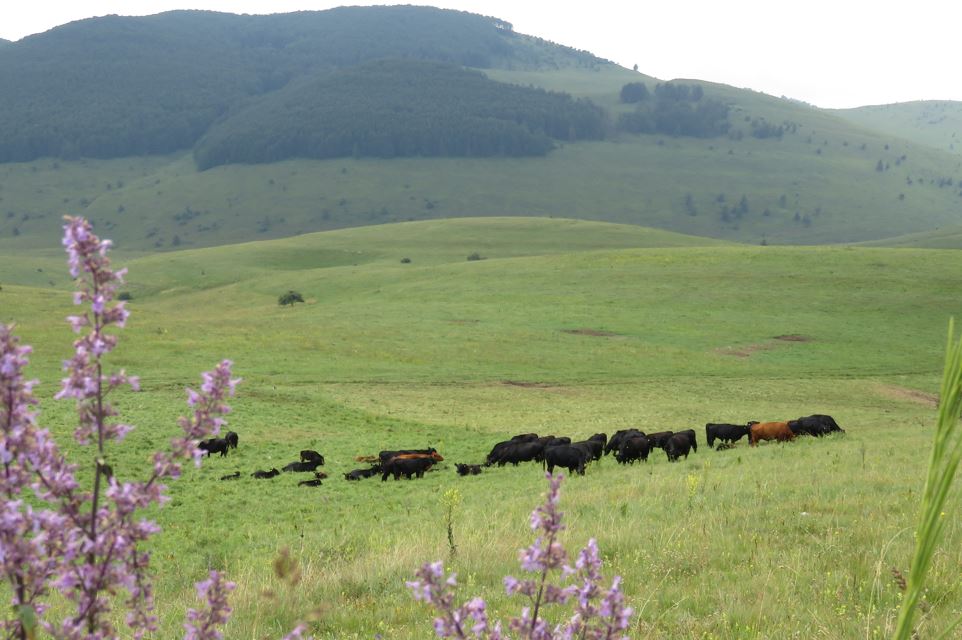
We observe serious negative discrimination of permanent pastures vis-à-vis arable land in terms of schemes/measures, definitions, payment levels and budget allocation, e.g.
- Over-focus of eco-schemes on arable land with a targeted coverage of 114% of the available arable lands in the country (BANCIK 2020);
- Under-focus of eco-schemes on permanent pastures with a targeted coverage of only 27% of the available permanent pastures in the country (BANCIK 2020).
We are also concerned with the following significant weaknesses of the CAP SP 2023-2027:
- Art.105 “No backsliding principle” is not respected at all for nature and biodiversity: There is less budget for the Natura 2000 measure with significantly reduced target areas for the new period while the number of the Natura 2000 sites eligible for support have more than doubled with the sites under the Habitat Directive. The budget for the HNV agri-environmental measure remains unchanged.
- The definition of permanent pastures was not changed to reflect their national and regional characteristics. The opportunities in the CAP SP Regulation were not used. This approach discriminates over 500 000 ha of permanent pastures and makes them ineligible for CAP support. At the same time, the lack of eligible grazing areas creates tension in the livestock grazing sector.
- Continuous lack of any monitoring of the environmental and climate effects of the CAP funding in Bulgaria. The proposed CAP SP is not even considering developing such a monitoring system despite the numerous recommendations from the former and most recent ex-ante evaluations of the RDP/CAP SP in Bulgaria.
Full text of the position can be found here (in BG).