Flood Protection – Let’s Start with Soil
The following text is an adaptation of ARC 2020 article. See the full version here.
The intensity of heavy rainfall events in summer and winter has increased significantly in northern and north-eastern Europe since the 1960s. Every year, about 250 000 people are affected by flood events. About 970 million tonnes of fertile soil are also lost every year in the EU due to water erosion. Heavy rainfall is likely to become more frequent in most parts of Europe as a result of climate change.
A lot of money is invested in building dams and retention polders to protect against flooding or in technically complex flow regulation, for example in vineyards. Such measures divert the water, but do not combat the causes of flooding. Nor are they a means of combating erosion. And by simply diverting the urgently needed water, the crops later lack it.
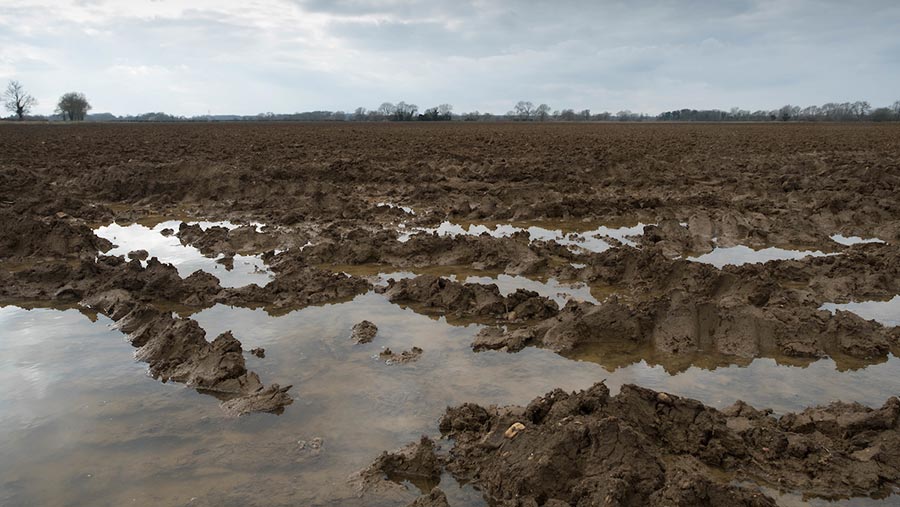
Soil compaction is a frequently ignored factor that contributes to heavy floods. Soils are suffering from increasing compaction in many intensively farmed regions in Europe. The soils no longer hold water in the area – the “rain retention capacity” decreases. Three important soil functions are disturbed at the same time: the capacity to absorb rain (infiltration -> erosion and flood protection), the storage capacity (-> adaptation to climate change, securing harvests) and groundwater purification and recharge capacity (-> delivery of ground and drinking water).
The EU research project SOILSERVICE, which involved eleven European university and research institutes, clearly stated in its 2012 report that intensive agriculture leads to a loss of soil biodiversity. Tight crop rotations, intensive fertilization and high pesticide use, as well as the absence of organic matter, lead to a deterioration of soil biodiversity and humus loss. For example, the increasing usage of mineral fertilizers does not ensure enough nutrition for microorganism living in soil. Moreover, mycorrhiza and other microorganisms are damaged by mineral fertilizers and pesticides. If biodiversity in the soil declines as a result, all these mechanisms for structure build up also fall away. The soil becomes a mere anchorage for one-sidedly nourished high-performance plants. Unfortunately, in the recent years there is not enough data on the soil compaction process across Europe.
As part of the implementation of the EU Flood Risk Management Directive, flood risk management plans had to be established by December 2015. Apart from other flood protection measures, the directive did propose that farms in flood-prone areas should fulfil management requirements in the future. However, instead of more strictly requiring the maintenance of a good soil structure in arable farming, this has so far mainly involved the conversion of arable land into grassland.
Despite the "conditionality" regulation in the strategic plans, the Common Agricultural Policy stipulates that the receipt of direct payments is linked to "the maintenance of good agricultural and environmental condition of agricultural land". Not only is the maintenance of such a state difficult to control in the Member States, but the conditions are extremely unclear regarding the aspects of soil protection. The various agronomic opportunities for building soil structure have not yet been discussed as a solution in all appropriate flood prevention strategies. For example, the accumulation of humus, both in arable farming and under pastures, in order to avoid floods, would be a very important measure that must be compensated for.