Ex ante evaluation of a multi-level governance CAP Strategic Plan for farmland bird conservation
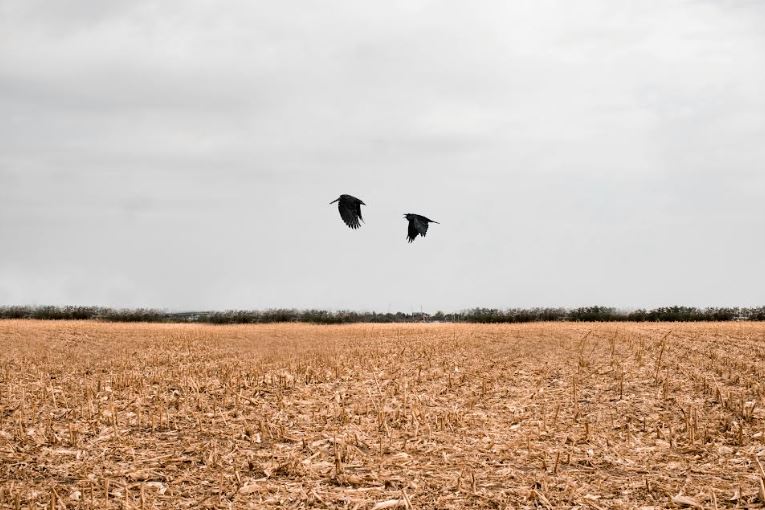
Scientific evidence shows that farmland bird populations have been consistently declining in Europe in the last few decades (Inger et al., 2015; Rigal et al., 2023) mainly because of recent agricultural intensification (Donald et al., 2001; Emmerson et al., 2016). Intensification refers to management actions aimed at increasing yields of crops and livestock (Turner & Doolittle, 1978).
Curbing the decline in the number of birds on farmland is one of the major environmental objectives of the new EU Common Agricultural Policy for the period 2023-2027. To tackle this problem, Member States must include specific measures in their Strategic Plans, specifically within their Green Architectures. Green Architectures refer to interventions related to the environment, biodiversity and climate. They are organised into five groups – 1) enhanced conditionality; 2) eco-schemes; 3) agri-environment and climate; 4) support for areas with specific handicaps; 5) support for non-productive investments.
This text provides a preliminary assessment of whether the measures included in the Spanish Strategic Plan (PEPAC) will achieve their intended objectives. Spain is a stronghold for farmland birds in Europe due to the later start of agricultural intensification compared to other European countries, but also due to its large territory and diverse geography.
The interventions included in PEPAC were recently analysed to assess in three levels whether they would be effective – fully, partially or not at all. The requirements for each Spanish Autonomous Region were also calculated, since in the country rural development interventions depend on regional authorities, while enhanced conditionality and eco-schemes depend on the central government. This multi-level governance is useful for effectively addressing the biodiversity and agronomic complexity of Spain. However, it poses problems in the implementation of Green Architecture interventions, especially in the creation of protocols for assessing their effectiveness.
204 interventions were evaluated, three of them included in the enhanced conditionality pack, one in the eco-schemes pack and the remaining 200 in the rural development packs. The proportions of farmland bird requirements considered by the conditionality and eco-schemes were 60% and 50%, respectively. The proportion of requirements considered by rural development interventions averaged 17% when proportions reached by interventions developed for each agrosystem and Autonomous Region were combined. Combined ex ante evaluations of the three elements of the Green Architecture thus ranged between 31% and 42% among Autonomous Regions.
The conclusion is that the Spanish Strategic Plan (PEPAC) does not meet the ambition to achieve effective halting of farmland bird declines. Furthermore, interventions included within the three elements of the CAP’s Green Architecture and among governance levels (central and regional governments) are not integrated to reach the minimum 10% threshold of uncultivated habitats.